
Annual burning of vegetation and monoculture of maize on sloping lands characterize agriculture in Northern Thailand, as in many other upland areas of the Central Mekong. Farmers know the practice rapidly degrades their soil, but it generates cash and requires minimal effort. The maize is produced for the burgeoning livestock sector in Central Thailand; the farmers spend their cash to buy food. “Maize growing does not make people more food secure,†says Chao Adhikarn Somkid Charanadhammo, the abbot of Pong Kum Temple in Nan. The abbot started a local crop diversification program that … [Read more...]
Territorial Learning Alliances and Quick Wins in Nicaragua
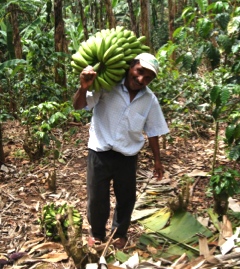
In 2013, Humidtropics adopted the concept of Flagship Projects as the main vehicle through which the Program will carry out its research to achieve the Intermediate Development Outcomes. There are five Flagship Projects, of which one is mainstreamed to ensure coherence throughout the Program. The remaining four Flagship Projects are based on geographic location, including the Central America and the Caribbean Flagship, where the North Nicaragua (Nicanorte) Action Site is located. Within the Action Site, the Program is taking on a series of challenges, such as degraded soils, the reduction … [Read more...]
Humidtropics Research Awarded Regional Prize in Central America
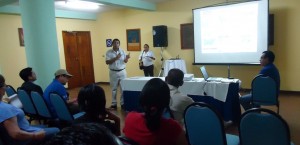
On the week of April 28 to May 2nd 2014, Humidtropics participated in the 59th Meeting of the Central American Cooperative Program for the Improvement of Crops and Animals (PCCMCA). The meeting was hosted by the Nicaraguan Institute for Agricultural Technology (INTA), a Humidtropics partner in the Nicanorte Action Site, and focused on the theme "Generating and Innovating Technologies for Food Security and Sovereignty". The event consisted of conferences, scientific tables, panels, brief courses, technical and scientific field visits, poster and stand shows, and work meetings with various … [Read more...]
- « Previous Page
- 1
- …
- 30
- 31
- 32
- 33
- 34
- 35
- Next Page »